
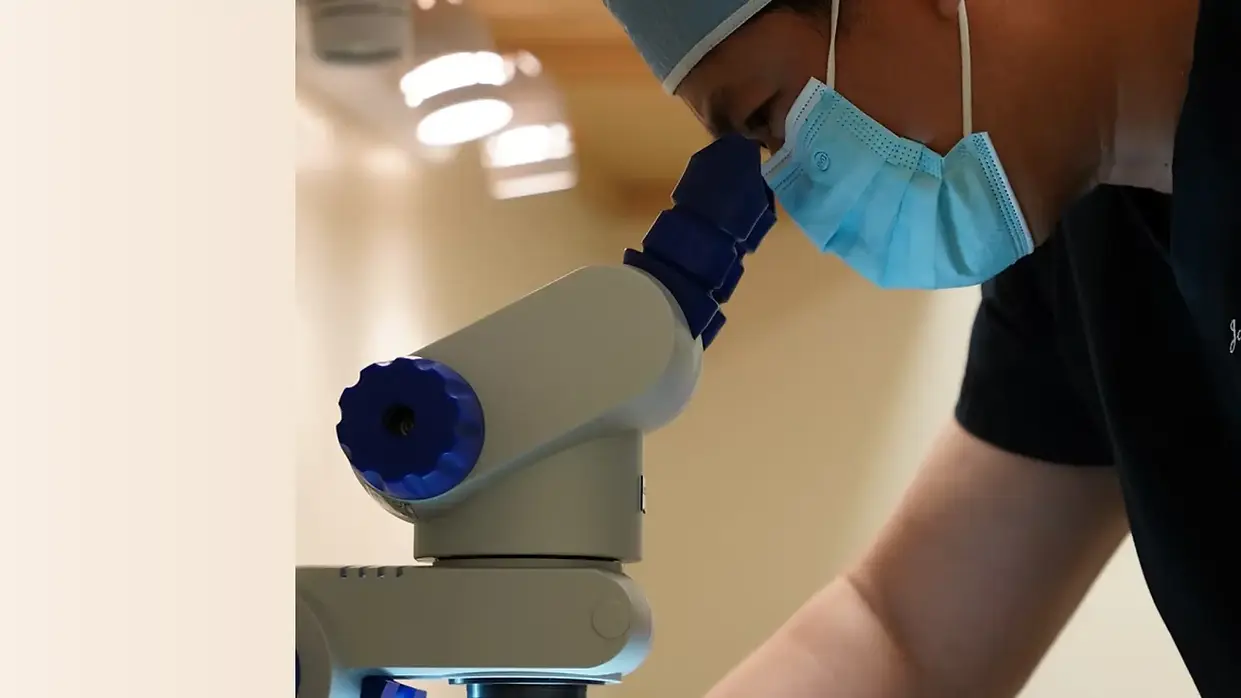

Follicular Unit Transplantation (FUT) or Linear Strip Method, commonly known as the strip method, is the gold standard for restoring maximum hair volume and graft density in a single surgical session. By harvesting a thin, carefully measured strip of donor tissue from the Safe Donor Area (SDA) at the back of the scalp, a team of specialized surgical technicians can isolate thousands of pristine follicular units under high-powered microscopes.
This meticulous microscopic dissection protects the protective tissue around the root bulbs, delivering superior graft survival rates and exceptional coverage for moderate to advanced pattern baldness.
Why Choose FUT Hair Restoration?
For patients seeking maximum coverage, FUT offers unique physiological and economic advantages:

FUT allows hair transplant surgeons to harvest 3,000 to 4,000+ intact grafts in a single procedure, making it ideal for extensive restoration.
Maximum Graft Yield
in One Session

Microscopic dissection under high-powered stereomicroscopes minimizes follicle transection (accidental damage during extraction), thereby preserving root integrity.
Superior Follicular
Survival
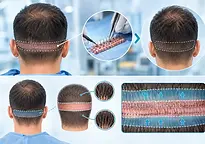
By removing donor tissue from a localized strip, the surrounding donor areas remain completely untouched and available for potential future touch-ups.
Donor Reserve
Preservation
Because large-volume extractions can be performed efficiently, FUT offers a lower cost per graft than other surgical options.
Cost-Effective
Density
Who is an Ideal Candidate for FUT?
While every patient’s hair loss pattern is unique, FUT is particularly well-suited for specific restoration goals and lifestyle preferences:
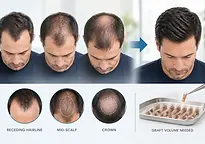
Candidates needing significant graft volume to reconstruct a receding hairline, mid-scalp, and crown simultaneously.
Advanced Hair Loss (Norwood Stage 4–6)

Individuals who prioritize achieving thick, natural hair volume in fewer surgical visits.
Patients Seeking
Maximum Density
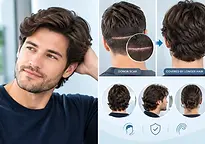
Candidates who wear their hair at a length that easily covers the fine, linear donor scar.
Medium-to-Long Hair Preferences

Those with tight donor areas or high density requirements who want to preserve maximum overall donor capacity for the future.
First-Time Transplant Patients
The Step-by-Step FUT Procedure
Consultation & Design

1
Custom hairline mapping and donor zone analysis.
Your hair transplant surgeon evaluates donor elasticity and density, mapping out a custom hairline that complements your facial symmetry and long-term restoration goals.
Donor Strip Harvesting

2
Precision harvesting for maximum graft viability.
Under local anesthesia, a thin strip of healthy, DHT-resistant hair-bearing scalp is harvested from the safe donor area. The incision is then closed using advanced trichophytic closure techniques for optimal healing.
Microscopic Graft Preparation

3
Stereo-microscopic dissection into individual units.
Surgical technicians dissect the donor strip under high-magnification microscopes into naturally occurring individual follicular units (1–4 hairs each) while preserving supporting fat and tissue structures.
Recipient Site Placement

4
Replicating natural growth angles and density.
The surgeon creates precise micro-incisions at natural angles, depths, and directions across the recipient area, artfully placing single-hair grafts along the hairline and multi-hair grafts in the core density zones.
Recovery & Care Protocols
Following post-operative guidelines ensures smooth donor line healing and provides the ideal environment for newly transplanted grafts to thrive.
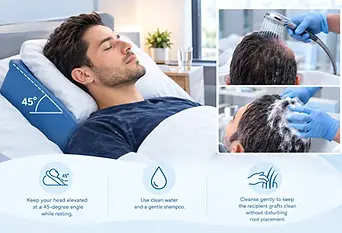
Immediate Donor & Recipient Care (Days 1–7)
Keep your head elevated at a 45-degree angle while resting to reduce swelling. Gentle scalp rinses using clean water and gentle shampoo should begin as instructed to keep recipient grafts clean without disturbing root placement.

Suture Removal & Suture Line Maturation (Days 10–14)
Sutures or staples are removed at the clinic. The fine linear donor scar will begin to mature, changing from a light pink line to a subtle, pale mark hidden beneath surrounding hair. Light daily activities can resume, though strenuous exercise should be avoided for 3 to 4 weeks.
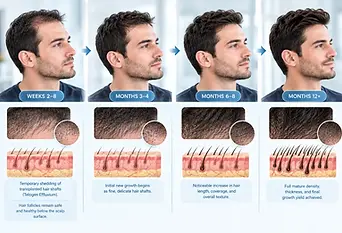
Growth Timeline (Months 1–12+)
Weeks 2–8: Temporary shedding of transplanted hair shafts (Telogen Effluvium).
Hair follicles remain safe and healthy below the scalp surface.
Months 3–4: Initial new growth begins as fine, delicate hair shafts.
Months 6–8: Noticeable increase in hair length, coverage, and overall texture.
Months 12+: Full mature density, thickness, and final growth yield achieved.
Frequently Asked Questions
How noticeable is the linear donor scar?
When performed by experienced surgeons using modern trichophytic closure techniques—where hair actually grows through the fine scar tissue—the linear scar heals into a pale, thin line that is virtually undetectable under hair styled at a medium or longer length.
Is the FUT procedure painful?
Local anesthesia ensures you remain completely comfortable throughout the procedure. Post-operative discomfort in the donor strip area is mild to moderate for the first few days and easily managed with prescribed or over-the-counter medication.
How long do FUT hair transplant results last?
Transplanted follicles are harvested from the Safe Donor Area (SDA), making them resistant to the hormone DHT (dihydrotestosterone). Once established, these hair grafts will continue growing naturally through its lifetime.